3. Design tips
- Do not use sheets that are thicker than necessary (owing to production time, costs and weight).
- Try to build a product as much as possible from uniform profile types and sheet thicknesses (owing to the setup and changeover time of the machine).
- Try to limit the number of welds in a product (due to contraction and the generation of internal stresses).
- Make use of stiffeners in set products where necessary.
- Wherever possible, weld in so-called low-stress areas (places where the loads are small). Bear in mind that a sheet can withstand tension better than compression (buckling).
- Make the same parts usable for several functions (in order to limit stock and save time setting up machines).
- Use standard components. These are less expensive and more easily available.
- When coming up with a design, consider how the various components are positioned relative to one another.
- Use shaping techniques instead of welding (to save time and money on positioning, aligning, post-processing).
- Use shaping techniques instead of machining techniques.
- Use as many simple construction elements as possible, such as strip profile, set sheet, tubes, etc.
- Take the next step in the production process into consideration.
- Keep the assembly of parts simple. Bear in mind the attainable tolerances of the production process.
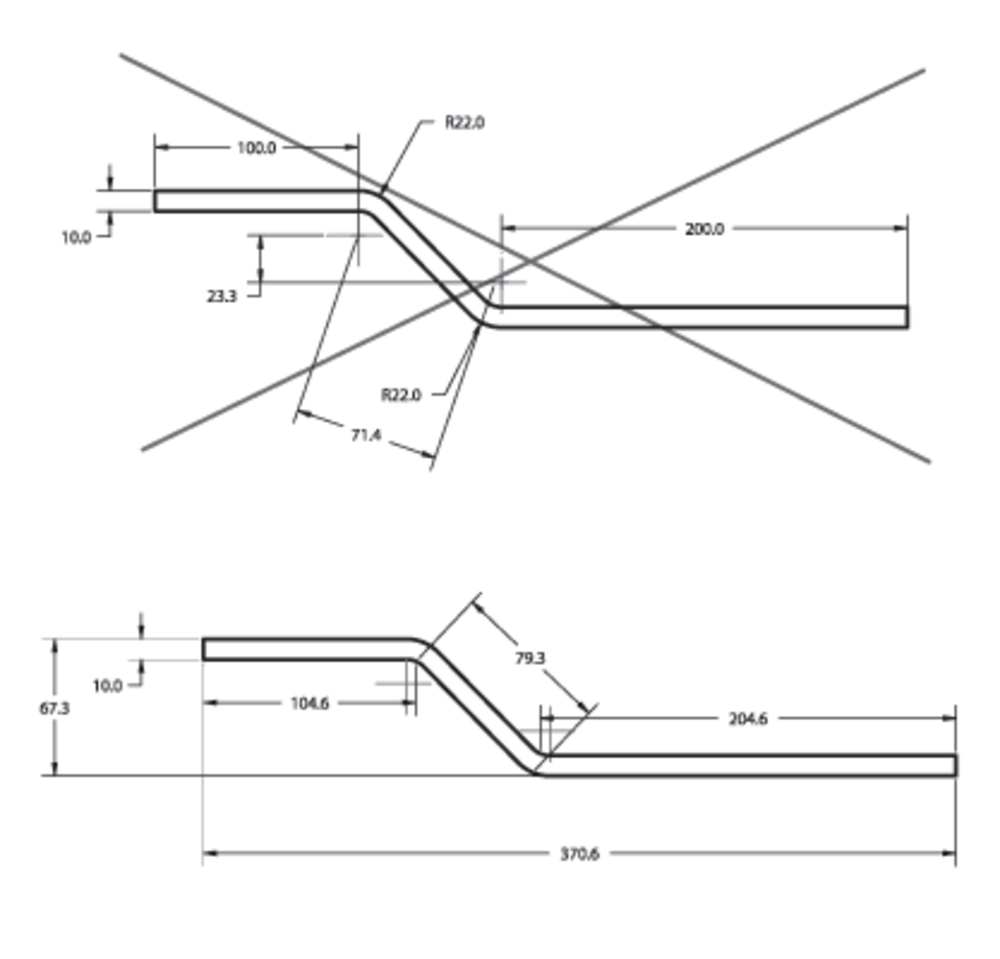
- When inscribing the dimension required for production, ensure dat this is directly applicable. (Fig. 3.1)
- Clearly indicate the finishing standard on the drawing (e.g. weld and finish sleek and smooth). Otherwise, only the basic machining operations will be carried out.
- Standardise frequently occurring design details or products like boxes, connections and seals. For composite products, make use of less expensive mono drawings.
- Sharp corners are often unwanted. So round them off with an external radius of 0.5 mm.